Cyberbond CB 2077
1 of 33 products in this brandRTU Product Type: 1K (1 component) Adhesive, Reactive Adhesive, Solvent free (100% Solids) Adhesive
Application Area: Appliances, Automotive Applications, Construction Applications, Electronic Assemblies, Footwear, Industrial Assembly, Medical Applications, Transportation Application
Compatible Substrates & Surfaces: Alloy Steel, Aluminum Alloys, Elastomers & Rubbers, Ethylene Propylene Diene Monomer (EPDM), Galvanized Steel, Plastics
Chemical Family: Cyanoacrylates
Features: Alcohol Resistant, Fast Bonding, Fast Setting, Good Adhesion, Good Gap Filling Capabilities, High Strength, High Viscosity, Improved Ageing Resistance, Low Odor, Solvent Resistance, Water Resistant
Enhanced TDS
Identification
- Chemical Family
- GBU
- RTU Product Type
- Categories
-
Application Information
- Cure Method
Applications
- Application Area
- Compatible Substrates & Surfaces
Applications & Uses
- Clean Surface
-
The surface condition of the mating parts has an enormous influence on the success of a bond. To achieve good bonding success the mating parts should be clean.
- LINOP Equipment
-
Cyberbond offers by means of the LINOP Equipment range suitable dosing and LED based curing devices. We also refer to suitable dosing tips which help an economical use of the adhesives (also if used manually).
- Processing Information
-
Surfaces should be clean and free from grease. Dispense adhesive to one surface only. Apply only enough to leave a thin film layer after compression. Press parts together and hold firmly until adhesive has fixtured. Maximum strength is attained typically in 24 hours. Product should be allowed to develop full strength before subjecting to any service loads.
- Solvent Resistance
-
Solvent Resistance Example Alcohol excellent Ethanol, Methanol, Isopropanol Aliphatic hydrocarbons (alkanes) very good Petrol, Heptanes, Hexane Aromatic hydrocarbons very good Benzyl, Toluol, Xylol Ester (aliphatic) poor Ethylacetate Halogenated hydrocarbons poor Methylenchloride, Chloroform, Chlorobenzol Ketone poor Acetone, Benzophenone Weak aqueous acid excellent diluted nitrite, muriatic acid, sulphuric acid, phosphoric acid Concentrated Acid poor nitric acid, muriatic acid, sulfic acid, phosphoric acid Weak aqueous base excellent diluted sodium hydroxide solution, caustic potash solution Concentrated Base poor sodium hydroxide solution, caustic potash solution Water very good - Solvent Resistance
-
Solvent Resistance Example Alcohol excellent Ethanol, Methanol, Isopropanol Aliphatic hydrocarbons (alkanes) very good Petrol, Heptanes, Hexane Aromatic hydrocarbons very good Benzyl, Toluol, Xylol Ester (aliphatic) poor Ethylacetate Halogenated hydrocarbons poor Methylenchloride, Chloroform, Chlorobenzol Ketone poor Acetone, Benzophenone Weak aqueous acid excellent diluted nitrite, muriatic acid, sulphuric acid, phosphoric acid Concentrated Acid poor nitric acid, muriatic acid, sulfic acid, phosphoric acid Weak aqueous base excellent diluted sodium hydroxide solution, caustic potash solution Concentrated Base poor sodium hydroxide solution, caustic potash solution Water very good
Features
- Ready-to-Use Product Features
Features & Benefits
- Product Highlights
-
Cyanoacrylates are fast setting, one component and solvent free adhesives. They are based on esters of cyanoacetic acid. To get to a finished product, mainly thickeners, respectively film forming agents (polymer methacrylics and acrylics) and stabilizers are added. The polymerization is initiated by present humidity. Best results are given between 40 to 70 % relative humidity.
Cyberbond standard grades are as follows:
- Powerdrop series (stabilized ethyl ester)
- Elastomer and plastic series (ethyl ester)
- Neomer Series (surface insensitive ethyl ester)
- xtraflex series (rubber toughened ethyl ester)
- metal series (ethyl ester)
- low odor series (alkoxy ester)
- medical series (butyl- and octyl ester)
Identification & Functionality
- Base Compound
-
Ethyl - 2 - cyanoacrylate
Packaging & Availability
- Regional Availability
Physical Properties
- Physical Form
Properties
- Density:
-
1060 kg/m³
- Flash Point:
-
85 °C
- Shelf Life:
-
9 months
- Specific Gravity:
-
1.06
- Viscosity:
-
600~1500 cps
- Physical Properties
-
Value Units Test Method / Conditions Flash Point 181 °F - Set Time (Acrylonitrile Butadiene Styrene) 5 - 7 seconds - Set Time (Ethylene Propylene Diene Monomer) 1 - 4 seconds - - Uncured Properties
-
Value Units Test Method / Conditions Density (at 20°C, uncured) 1.06 g/cm³ - - Cured Properties
-
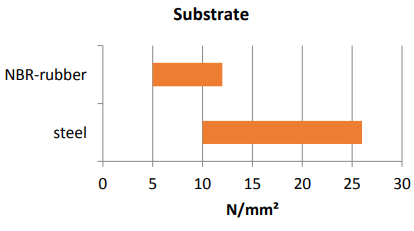
Value Units Test Method / Conditions Strength of Cured Adhesive (Nitrile Butadiene Rubber, cured) 5 - 12 N/mm² - Strength of Cured Adhesive (steel, cured) 10 - 26 N/mm² - - Typical Properties
-
Value Units Test Method / Conditions Relative Humidity 40 - 70 % - Service Temperature Range -70 to 200 °F - Setting Time (Steel) 20 - 50 sec - Viscosity (at 70°F, 158 s⁻¹) 600 - 1500 mPa.s Cone-Plate Viscometer
Regulatory & Compliance
- Certifications & Compliance
- Specification
-
- ISO 10993-5: Tests for in-vitro cytotoxicity (biocompatibility).
- ISO 10993-10: Tests for iritation and delayed-type hypersensitivity.
- ISO 10993-11: Tests for sytematic toxicity.
- RoHS conform.
- NSF: (Nonfood Compounds Registration Program)
- This product is acceptable for use as an instant adhesive in food processing facilities.
- This product must only be used in a manner as to ensure it will have neither direct nor indirect contact with food or potable water.
- Category Code: P1, Registration Number: 153547
Safety & Health
- Potential Danger of Cyanoacrylates
-
You should care for the following:
- Use in well ventilated areas only
- Installll suitable exhaust systems in the workshop
- Apply material economically and use a dosing system where appropriate
- Allow a consistent relative humidity of 50 to 65 %; with regards to lower figures the polymerization will be delayed and monomer adhesive fume will appear
- If necessary: wear suitable, non-sucking gloves (Eg. No cotton)
- Keep adhesive out of reach of children
The data mentioned in this TDS, particularly the recommendations and use of products are based on our recent knowledge and experience. Due to the fact of having so many different materials involved and conditions of applications which are out of our influence, we strongly recommend to do sufficient tests in order to guarantee that Cyberbond products are suitable for the intended process and applications. Except for wilful acts any liability based on such recommendations or any verbal advice is hereby expressly excluded.
Storage & Handling
- Storage Conditions
-
Store products in a cold and dark place. Before use allow to reach ambident temperature.
- Storage Information
-
Cyberbond CB 2077 should be stored unopened in a cool, dry place out of direct sunlight.
- Shelf Life
-
9 months (max. 70 °F, unopened)
Technical Details & Test Data
- Adhesive Strength and Durability Profiles
-
Figure 1: Strength of Cured Adhesive
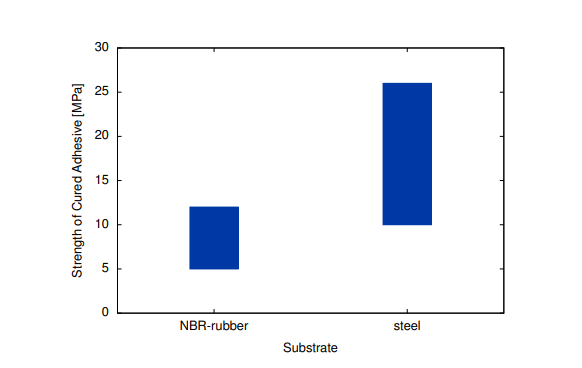
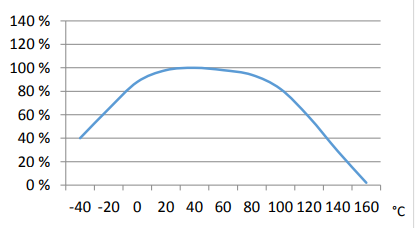
Figure 2: Hot Strength (%RT strength, tested at temperature)
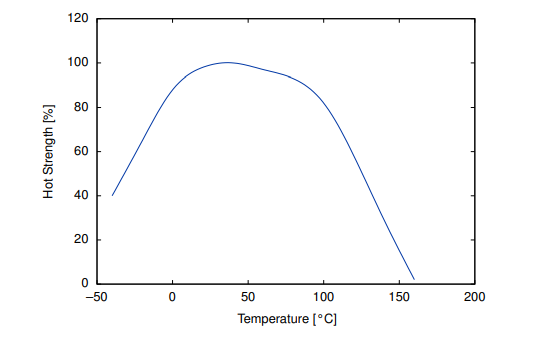
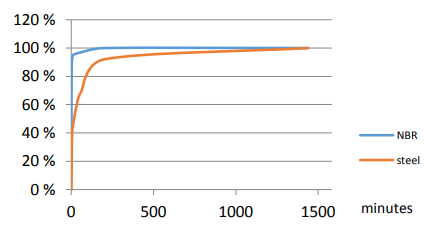
Figure 3: Time Until Full Cure
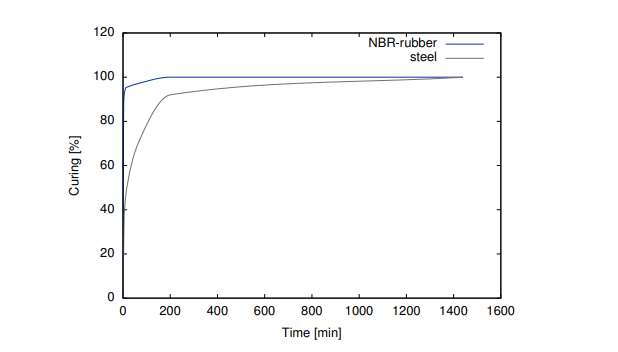
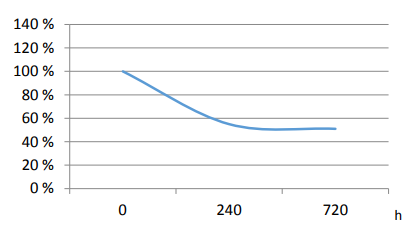
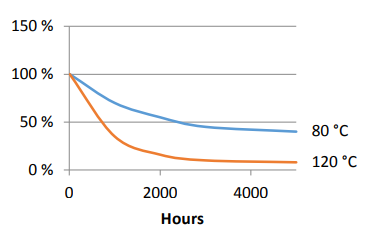
Figure 4: Heat Ageing on Steel (aged at temp. indicated and tested @ 20°C)
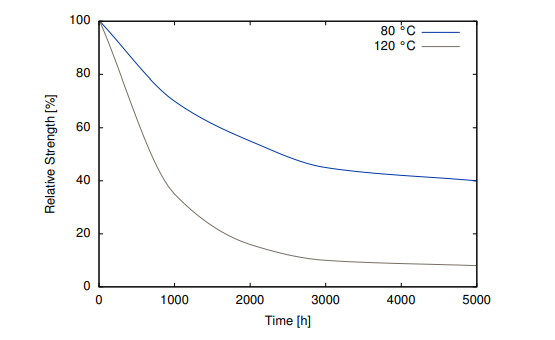
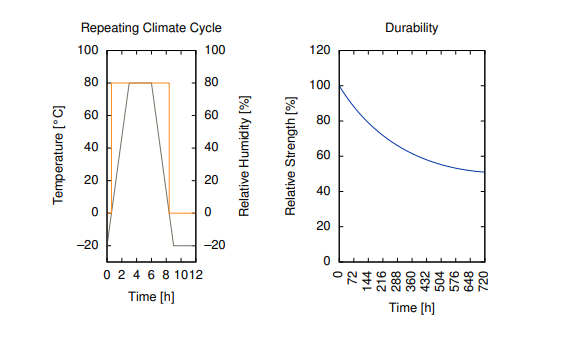
Figure 5: Durability after Alternating Climate Storage
- Measurement of Viscosities
-
Viscosity describes the flow-ability of a liquid. Cyberbond measures the viscosity of the products by means of the cone/plate method: the liquid is applied on a panel and a defined cone presses the liquid together and rotates. You differentiate between a Newtonian and a thixotropic liquid. In terms of a Newtonian liquid you will get a relative constant viscosity graph in dependence of the rotary speed of the cone. In terms of thixotropic liquids the product becomes more liquid (down to its base viscosity) the faster the cone rotates. The viscosity is measured in mPa*s (milli Pascal x second) [SI system] or in cP (centipoise) [CGS- system]; 1 mPa*s = 1 cP. In order to allow products comparison all adhesives are measured at the same rotation speeds.
- Newtonian liquids at 160 upm
- Thixotropic liquids at 0,5 upm and at 160 upm
Temperature always is at 20 °C / 68 °F, if not mentioned to be different.
- Technical Details
-
Hot Strength on Steel
% of RT strength, tested at temperature.
Time Until Full Cure
% of RT strength
Strength of cured adhesive
Substrate N/mm2 NBR-rubber ▲ 5 to 12 steel 10 to 26 ▲ material failure
Heat Aging - on Steel
Tested at 20°C
Durability after Storage under Changing Climatic Conditions
Test with stainless steel
Above freeze point 80%rel. humidity
Temperature range: -20 - 80 °C
Cycle count - 60Holding time at start temperature - 0
Heating up phase - 3
Keeping warm phase - 3
Cooling down phase - 3
Holding time at final temperature - 3